

The Body is a House: The Story of Proprioception as We Float In Space
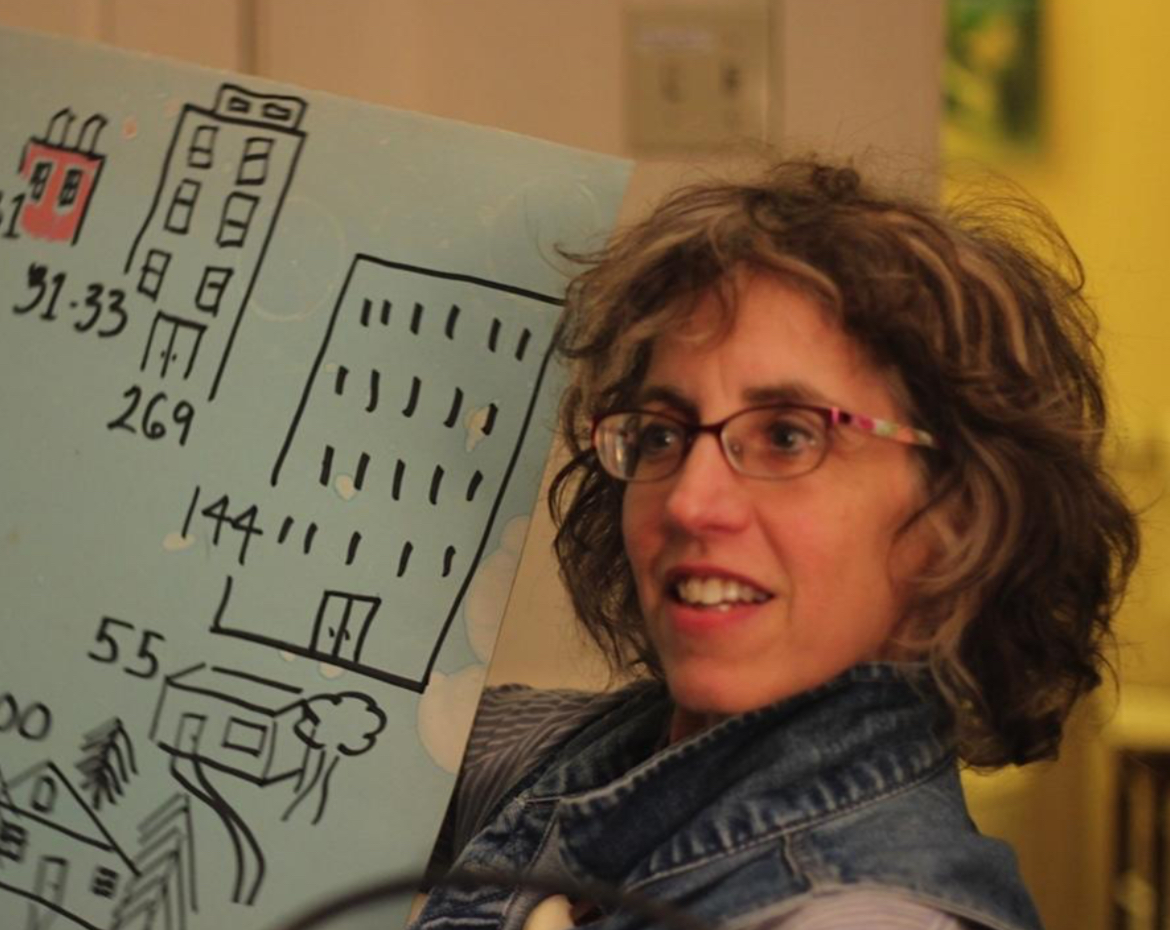
Straight from Black Mountain College Museum + Arts Center’s “Imaginary
Landscapes” Exhibit and Conference, Kate Tarlow Morgan comes home to MAGMA to share some moving ideas about what happens to the body when it occupies different spaces.
The Body is a House:
The Story of Proprioception as We Float In Space
This workshop draws on two foundational texts by poet, educator, and Black Mountain College rector Charles Olson: his unpublished essay “The Body is a House” (1955) and “Proprioception” (1961). Together, these texts trace a proprioceptive quest: the body’s role in space and inside itself.
Kate will also source the physical experiments of Olson’s colleagues ~
● Dancer: Katherine Litz’s explorations in the Kinesthetic Cube
● Inventor: Buckminster Fuller’s Geodesic Dome
● BMC Student, Kenneth Snelson’s Tensegrity Integrity
And introducing ~ The Extracellular Matrix
Essentially, one cannot be inside or outside of a place without a body.
All bodies welcome.
$10-30 suggested
Kate Tarlow Morgan, dancer, author, historian, and Body-Mind Centering® teacher lives in Marlboro, Vermont and sometimes, in her hometown of NYC. Her daily movement practices navigate around her Attic, at Movement Arts of Gloucester, Ma. (MAGMA) and Brattleboro School of Dance. As sole archivist of The Rhythms Fundamentals —based on the study of human and animal movement—Kate is writing a 100- year history of the hotbed of somatic educators in New York City who participated in the radical reforms of the Progressive Era. For more than two decades, Kate was editor-in-chief of Currents Journal for the Body-Mind Centering Association, and editorial consultant for Lost & Found: CUNY Poetics Document Initiative.
1 See blackmountaincollege.org. Throughout 1933–1957, Black Mountain College (BMC) nurtured a collaborative community of artists, writers, dancers, musicians, potters, weavers, architects, and furniture makers. Rooted in John Dewey’s learning by doing and decisively shaped by the Bauhaus refugees who arrived from Europe, BMC was not only a site where distinctive subjects were taught, but a laboratory where foundational questions about craft, collaboration, and integrated skills were actively and sometimes impetuously tested.